
Dr. StaceyPractice operations & follow-up
Working ads still need someone doing the work.
Dr. Stacey’s ads were already working. She wanted the testing handled, the numbers clear and more of the work off her plate.
Hear what made the difference ↗
Relevancy. Omnipresence. Intimacy. Give people a reason to notice your practice, get to know you and take the next step.
The psychology. The creative. The work that connects them.
Speak to the life they invest in
Explore five connected campaign examples.
 For chiropractors
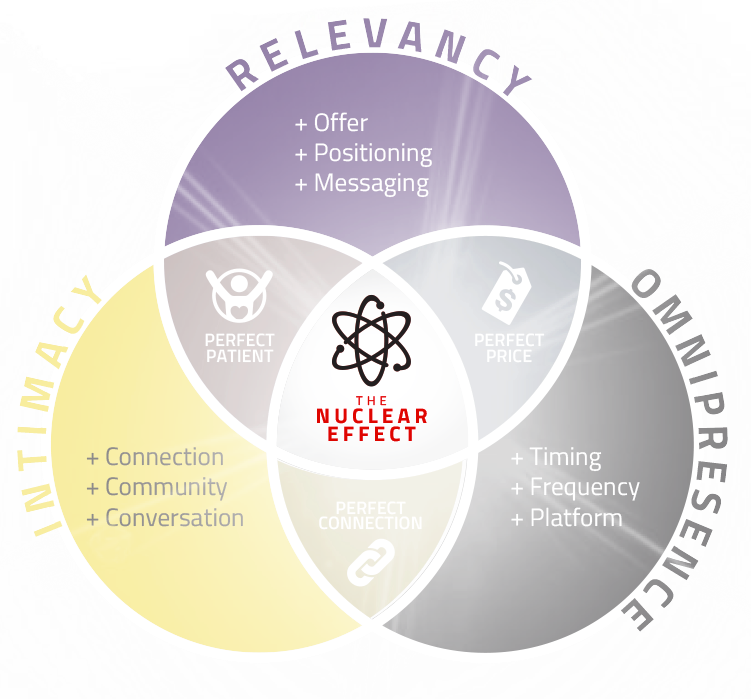
Relevancy. Omnipresence. Intimacy. Working together.



“Referral-like” describes the experience the method is designed to create: someone arrives with a sense of who you are, what you do and how you approach your work.
Your approach. The person behind it. What a first visit involves. Each encounter can add understanding before someone arrives. Follow that connection below, then explore the original lessons.
The principles matter because of what happens in the practice. These doctors connect the marketing to bookings, care decisions and the work of running a practice.
Dr. Stacey’s ads were already working. She wanted the testing handled, the numbers clear and more of the work off her plate.
Hear what made the difference ↗
In about five and a half weeks, Dr. Jeff reported:
His account also describes the confidence of opening another clinic while his other practices continued receiving new patients.
Follow the journey into care ↗
Dr. Kyle’s response outpaced the practice’s follow-up. Growth needed staffing and available appointments in the same conversation.
Bring the campaign and the clinic into the same plan.
See why capacity matters ↗Self-reported client experiences, with each period and stage shown. Results vary by practice, market and follow-through.
 FOR CHIROPRACTORS


























Create a compelling marketing message that resonates with the people your practice is best equipped to serve.
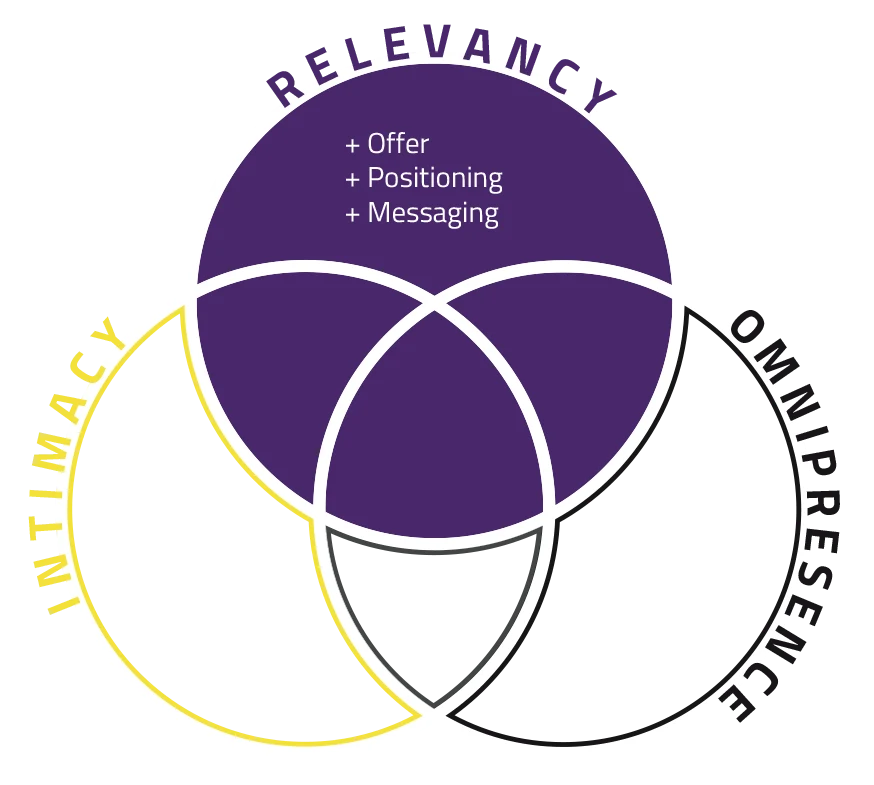
The first encounter gives your practice a meaning. Make it about more than a price.
Relevancy connects your message, offer and destination to the person seeing them. What are they experiencing? What do they want to understand? What would make the next step feel worthwhile? An effective campaign answers those questions in the language of the community you serve.
What are you inviting someone to do? Make the next step clear and useful. Explain what the person can expect, what it involves and why it matters to their situation.
Why this practice? Show your approach, the practitioner behind it and what makes the experience distinctive. Give people a reason to choose you beyond the introductory offer.
How do you communicate that value? Meet people where they are: some are discovering chiropractic, others are comparing practices, and some are ready to book.
An introductory offer can open the door. Your story, approach and useful information give the invitation substance. The ad and the page it leads to should feel like the same conversation.
Relevancy / Made visible
A family recipe. Work someone takes pride in. Music that feels like part of them. A specific detail gives the creative something meaningful to say.

The dumplings are only part of the moment. The deeper story is time together and a tradition being passed on.
Fictional practice concept
The developer has ideas to build and long screen days to navigate. The message connects that purpose with a recognisable working-day concern.
Fictional practice concept
The soundcheck, the band and the shared glance make the scene feel lived in. Her creative identity shapes the invitation.
Fictional practice conceptShow up consistently with different, useful reasons for your community to get to know you.
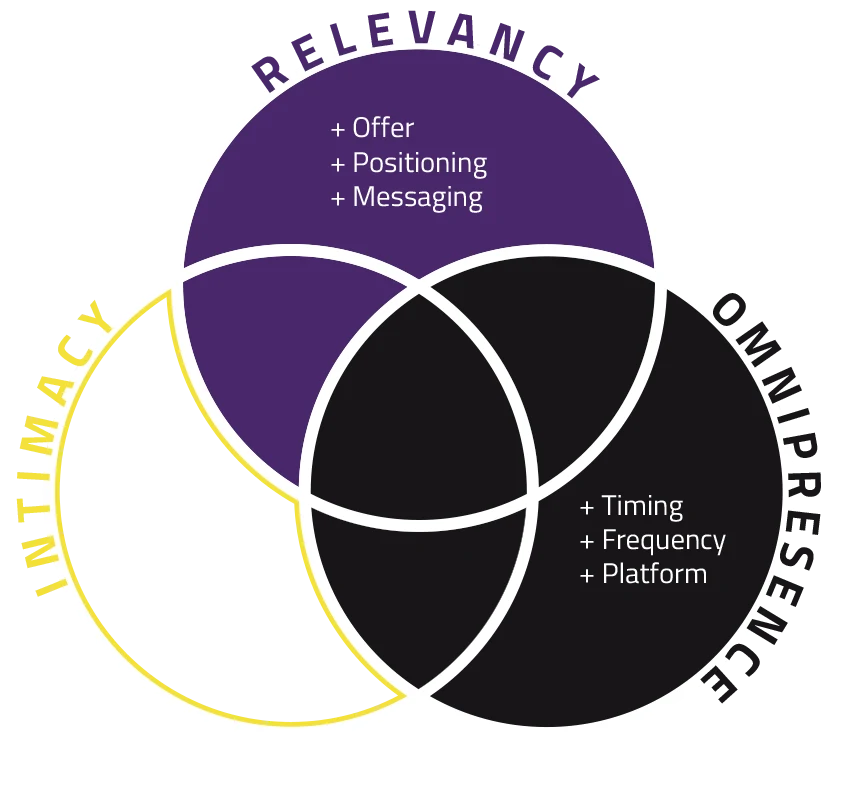
One person is ready today. Another is still getting to know your practice.
Omnipresence is the experience of encountering a recognisable practice often enough to build familiarity. It works through useful variety: introduce the doctor, explain the first visit, answer a concern, show the practice and make the next step clear.
Be present as readiness changes. Consistency gives people more opportunities to encounter your practice when the message becomes relevant to them.
Give each encounter a job. Repeat the identity of the practice, while varying the question, story or useful information. Familiarity should not depend on endlessly repeating the same interruption.
Choose the places that fit your audience and purpose. Facebook, Instagram, YouTube and email can play different roles. The message should make sense in the place someone encounters it.
The goal is a connected body of content, rather than isolated promotions. Judge the sequence by what people learn about the practice and whether they have a useful next step. Channel choice and spending should reflect your audience, capacity and actual results.
Build a real connection with the practitioner, the practice and the people behind the message.
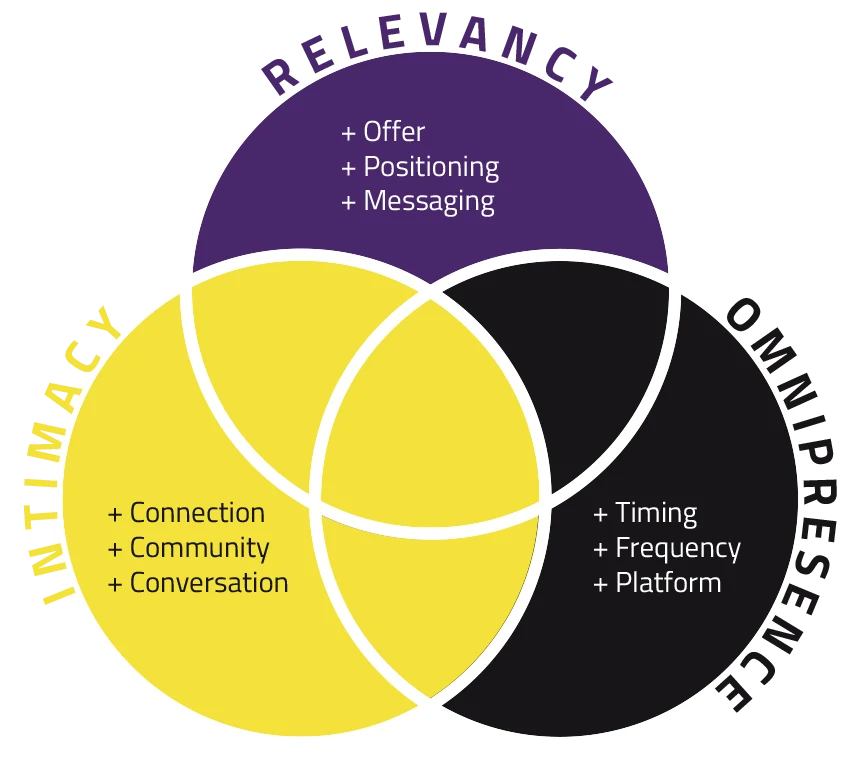
A person asks a real question. Someone notices and responds. That moment matters.
Intimacy is about creating relationships. Technology can support the conversation, but people still want to know who they are dealing with, whether they will be heard and what kind of experience to expect.
Show the real practitioner and the real practice. Explain what you believe, how you approach your work and what matters to you. Be honest about what someone can expect.
Reply to questions, comments and appropriate messages. Listen to the concern behind the inquiry. Make ownership clear so an interested person is not left waiting between the campaign and the front desk.
Connect the relationships that already exist around the practice with the way you show up online. Create space for useful discussion, familiarity and participation.
The recognisable voice of the practice should carry through the ad, website, reply and first appointment. Automation is most useful when it supports that continuity and makes the handoff to a person clear.
Relevancy, Omnipresence and Intimacy each have a role. The original method goes further: it shows how they work together to shape perceived value, connection and patient fit. Here is what each overlap means in practice.
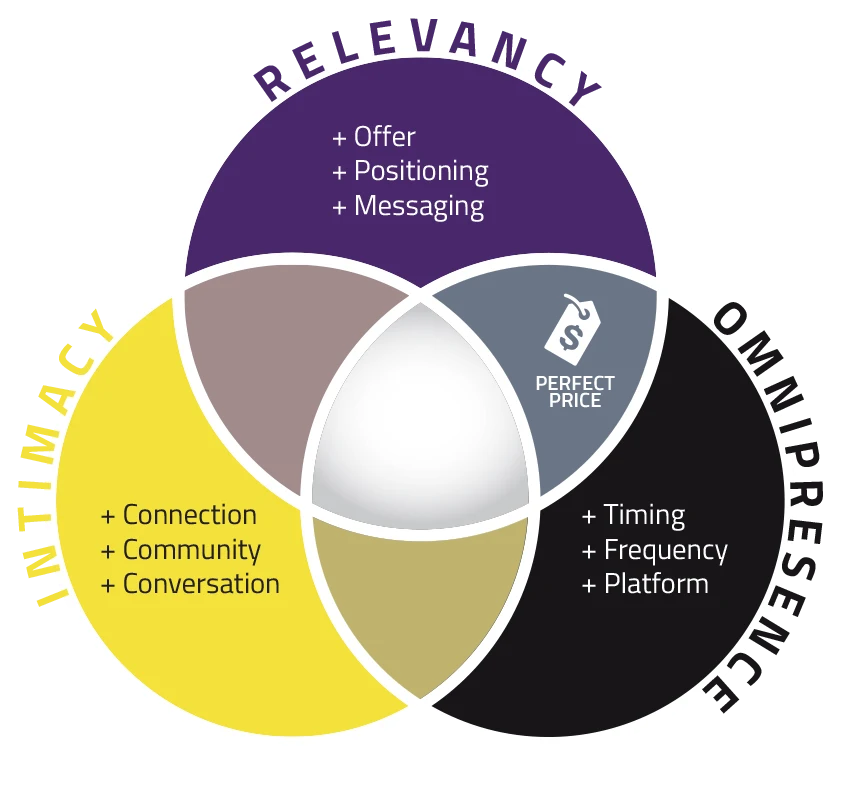
If someone only sees a price, that is what they have to compare. Relevancy gives the practice a meaning; Omnipresence gives you repeated opportunities to demonstrate it. Together, they can help people understand why your approach matters before a fee becomes the entire discussion.
Explain the first visit clearly. Show the doctor’s thinking. Answer the questions people bring to the decision. Over time, that body of useful information can establish a more informed basis for choosing the practice.
The original method calls this overlap the “perfect price.” It describes the role of perceived value and authority. It is not a promise that marketing alone determines fees, removes every objection or produces a particular financial return.
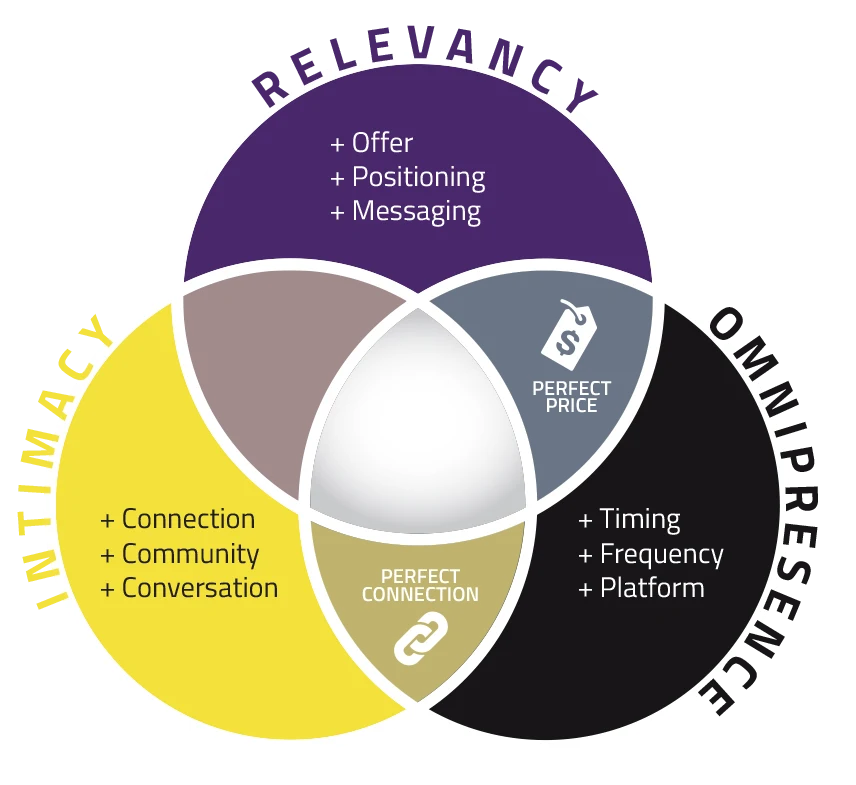
You have probably met someone who arrived knowing little about your practice or what to expect. The opening conversation has to do all the work. Now consider a person who has already seen the doctor explain the approach, toured the office online and received a thoughtful answer to a question.
Omnipresence creates more opportunities to become familiar. Intimacy makes those encounters personal and recognisable. A real voice, useful replies and consistent follow-through give people something more substantial to connect with.
The original method calls this the “perfect connection.” The aim is understanding and familiarity before arrival, followed by a genuine conversation in the office. The relationship still has to be earned.
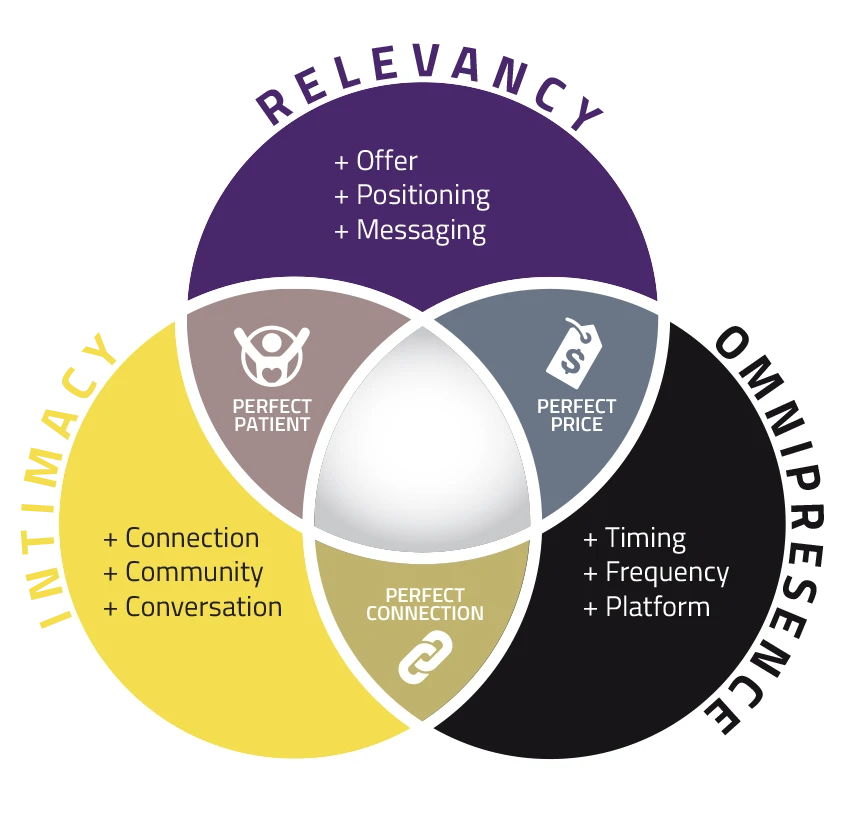
When the message is vague, expectations can drift. When it is specific, people have more information to decide whether the practice and the next step make sense for them.
Relevancy connects the message to a person’s situation. Intimacy shows the practitioner’s values, approach and personality. Together, they make the invitation more recognisable to people who connect with what the practice stands for.
“Perfect patient” is the original method’s name for that overlap. The useful goal is an informed inquiry and a clearer starting point for the clinical conversation. Suitability for care is determined through the practice’s assessment, not by an advertisement.
A relevant message. A familiar practice. A real connection. Each makes the others more useful.
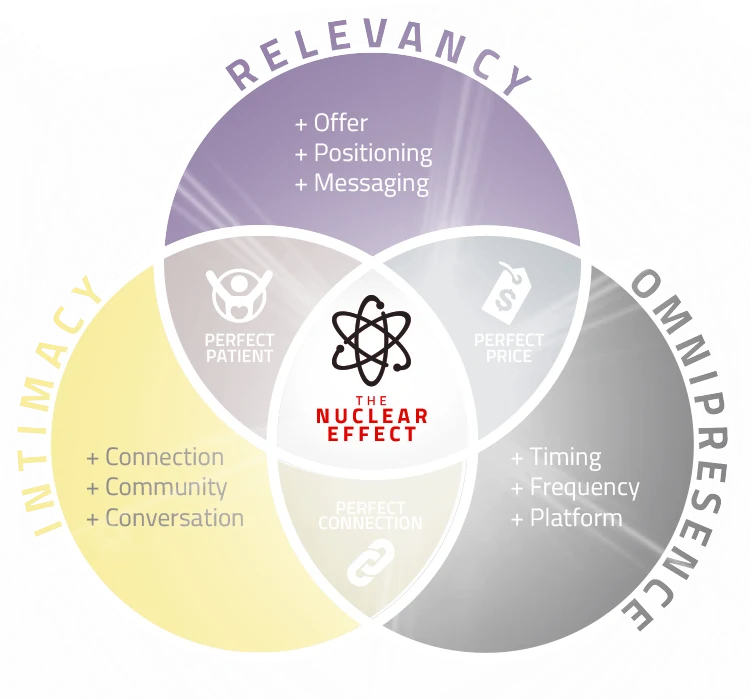
The original guide calls the intersection the Nuclear Effect: the combined potential of the message, audience and relationship.
Useful content gives people reasons to pay attention, understand the practice and stay connected. A larger audience is valuable when the right people recognise the practice and know what to do next.
People can arrive with more context about the practitioner and the first visit. That creates a clearer starting point for the practice’s own assessment, explanation and care recommendations.
Thoughtful conversations can continue beyond the first inquiry. The method connects how the practice becomes known with how it earns trust and stays present in its community.
These are the method’s intended effects, not guarantees of growth, revenue, patient volume or care outcomes.
You see the finished creative. We carry the decisions behind it: who we’re speaking to, what each encounter needs to do, how the handoffs connect and what improves next.
We turn your expertise and the questions people ask into campaigns with a point of view. The practitioner’s story, original creative and distribution give your community more reasons to understand the practice.
We carry the promise into the page, explain the first visit and connect the booking route. The person should know whether they have requested a time or confirmed one, and what happens before they arrive.
We connect inquiries, responses, reminders and handoffs around your team. Education, follow-up and appropriate reconnection carry the relationship beyond the first appointment. PowerPANEL keeps the conversation and next action together.
We review inquiries, bookings, attendance and care starts alongside your team’s feedback. The question is what to improve next: the message, the page, the response or the level of demand the practice can support.
A low cost per inquiry tells you only part of the story. Actual collections, acquisition costs and the time and capacity needed to serve people help you judge whether growth is worthwhile.
Lots of inquiries but few bookings? Inspect the response and booking experience. Bookings without attendance? Look at expectations and preparation. Demand beyond the team’s capacity? Bring the campaign and the appointment book into the same plan.
Managed marketing, creative and technology. Month to month. Memberships start at USD $369/month, with the work and responsibilities confirmed for your selected membership. Paid media and onboarding are separate. Explore the memberships.
Here, R.O.I. means Relevancy, Omnipresence and Intimacy: give people a reason to pay attention, become familiar through useful encounters, and help them get to know the people behind the practice. In practice, that could be a campaign about an everyday activity, a matching page that explains your care, a doctor video that answers a real question, and a helpful response when someone reaches out. Each piece earns the next step. Financial return still matters—we measure it separately rather than treating attention as a business result.
It gives someone a chance to understand your practice before they contact you. A referral arrives with some trust already attached; your marketing can do more of that introductory work instead of asking a stranger to book from a discount alone. Show the doctor, explain the first visit, answer the questions people actually ask and keep the invitation consistent from ad to page to reply. The aim is a more informed conversation—not a promise that every inquiry will be a perfect fit or become a patient.
No. Advertising is one introduction, not the whole relationship. The method gives your campaigns, website, useful content, search presence and follow-up a shared purpose. Someone who clicks a message about enjoying family life should not land on an unrelated offer or have to start the conversation again when they call. We connect the message and the next step, then choose the channels that fit your community, capacity and agreed scope. More channels are not automatically a better system.
Not if they are doing their job. We look at what already earns attention, what helps people understand your care and where the next step breaks down. Keep the useful work; improve the weak connection. That might mean a stronger campaign, a clearer landing page, better booking follow-through or more disciplined testing—not automatically a new website or another advertising channel. We agree on the work before replacing assets.
“the testing that you do is invaluable” — Dr. Stacey
Client experience · 2018You bring the practice knowledge, clinical judgment and approvals. We plan and produce the agreed marketing, connect the handoffs and manage the next improvements. You should not have to become your own full-time marketer. Your team still has an important role: confirm the facts, tell us what patients are asking, keep appointment capacity current and take over conversations that need a person. We define those responsibilities before starting, so “done for you” does not become “nobody owns it.”
“I just burned out on that to be honest” — Dr. Andrew
Client experience · 2018The next step should follow what the person actually does. Brock Booker handles the first booking invitation. Finn Followup supports the conversation if they have not booked. Once booked, Carl Concierge supports intake and confirmation. Parker keeps notes, logs and the clinic or doctor handoff connected throughout; Reese supports appropriate future-appointment reactivation. Those are defined roles, not a claim that every workflow is already active in your account. We confirm the approved answers, consent, booking route, stop rules and human handoffs for your practice. A booked person should not keep receiving “please book” messages, and clinical questions belong with your clinical team.
Follow the person beyond the inquiry. Keep inquiries, scheduled appointments, attendance and decisions to begin care distinct. Review those steps alongside the cost and your team’s feedback, then use the findings to decide what to improve. In the eight-week audit shared in his 2017 interview, Dr. Dan reported 79 opt-ins, 38 scheduled, 28 attended and 25 who chose care. His account shows why the stages matter: a lead count alone would not tell that story. It is a historical client experience, not a prediction of what every practice will achieve.
“out of 38, 28 eventually showed up” — Dr. Dan
Client experience · 2017 · Eight-week auditAgree on the starting point and review milestones—not a guaranteed patient count by a promised date. A practice with working campaigns, useful content and available appointments starts in a different place from one building those foundations. First confirm that the message, page and response work together. Then look at whether the right people are enquiring, arranging visits and attending. If a step is weak, improve that connection before simply spending more. We can show historical client experiences; we cannot promise that your practice will repeat another clinic’s timeline or results.

“We believe people deserve to feel great and live their best life: Chiropractic helps!”
The method starts with the person. What do they want to do, protect or get back to? What would help them understand your approach and feel ready for a conversation?
We’ve spent more than a decade refining that connection with chiropractors. Today’s creative tools, AI and automation give us more ways to carry it through. The standard stays the same: make the work relevant, make every encounter useful and keep improving.
Co-founded by Hayden and Jessica Power, PowerSURGE brings the disciplines of a full marketing department into one coordinated growth system: strategy, creative, paid media, websites, automation and follow-through.
Let’s turn your approach into a message people recognize—and a clear path to your practice.
Let’s Talk About My PracticeExplore the fit before deciding on an engagement.